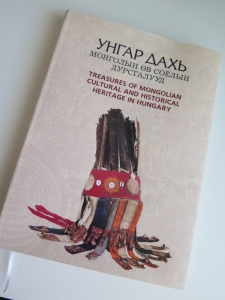
Treasures of Mongolian Cultural and Historical Heritage in Hungary
Edited by Ágnes Birtalan
Project leader: Sampildondow Chuluun
Ulaanbaatar – Budapest, IAMS – ELTE 2020
I received a copy of this wonderful volume only a few days ago, although it’s been published in Mongolia at the end of 2020. The project, “Mongolian Heritage Spread across the world”, initiated by the International Association for Mongol Studies in 2017, at last reached Hungary. The first part of the series had been published about the materials kept in Russia.
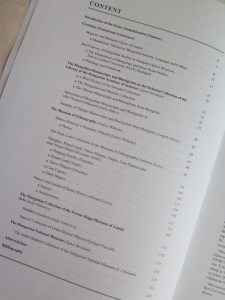
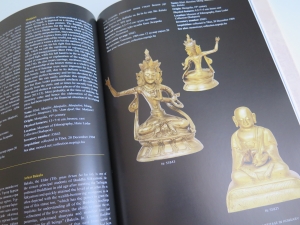
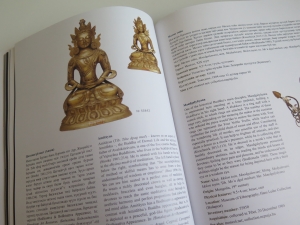
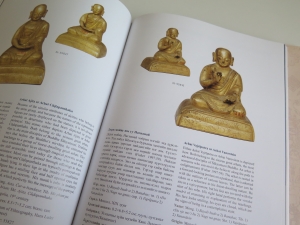
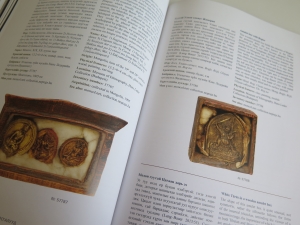
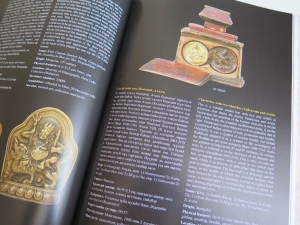
Present volume demonstrates the most valuable items preserved in the Library and Information Centre, Hungarian Academy of Sciences, the Hungarian National Museum, the Ferenc Hopp Museum of Asiatic Arts, and the Museum of Ethnography. Many of the materials introduced here had not been previously described elsewhere, and they offer an insight into the unique material heritage of Mongols in Hungary.
Within the project I was tasked to introduce the Hans Leder Collection of the Museum of Ethnography, and because the focus of my research was always on metal work and statuary, as well as the artist, the maker, the majority of the objects I handled here, were statues of different kinds. They play a significant role in the life of Mongolians until today, they are carefully looked after and highly respected whether they are placed in a yurt or a temple. My forever favourite workplace was the Zanabazar Museum of Fine Arts in Ulaanbaatar, where I was fortunate to spend six months, spending my days among the most beautiful statuary artefacts, which follow the traditions of the 17th century artist and spiritual leader, Dzanabazar. Apart from my favourite topic, the volume reveals manuscripts and blockprints, shamanic objects, thangkas, the most varied ritual objects and other Buddhist artefacts.
We started working on our descriptions in the middle of the pandemic in 2020, when all museums and collections were closed in Hungary, therefore impossible to access and view them in person, so most of us worked from photographs and other online resources. The result though is a beautifully presented and engaging academic publication, easily digestible for anyone with an interest in Mongolia and its traditions, or in arts in general. It is currently available for purchase in Mongolia, but hopefully it will change in the foreseeable future and soon becomes available for the wider public too.